Constipation: Causes, Symptoms, Treatment and Foods That Help You Get Relief Naturally
Have you ever felt that your stomach has not cleared properly, even after sitting on the toilet for several minutes? Or do you feel the urge to pass stool but find it difficult to do so?
You are not alone. Constipation is one of the most common digestive problems. It can affect people of almost every age group. Some people experience it occasionally, while others struggle with it for months or even years.
Many people think constipation simply means not passing stool every day. But that is not entirely correct. Even if you pass stool daily, you may still have constipation if you need to strain, pass hard stools or feel that your bowel has not emptied completely.
The good news is that many cases of constipation can improve with changes in food habits, water intake and daily routine. However, persistent constipation should not be ignored.
Let's understand why constipation happens, how to identify it and what you can do to get relief.
1. What Is Constipation?
Constipation is a digestive condition in which passing stool becomes difficult or less frequent than usual.
A person may experience constipation when:
Bowel movements occur fewer than three times a week.
Stool becomes hard, dry or lumpy.
Passing stool requires excessive straining.
There is a feeling of incomplete bowel emptying.
The person feels bloated or uncomfortable after using the toilet.
One important thing to understand is that everybody has a different bowel routine. Some people pass stool twice a day, while others may pass it once every two days.
Having a bowel movement every day is not compulsory for good health. What matters is whether your stool passes comfortably and your bowel habits are normal for you.
2. What Are the Main Causes of Constipation?
There is no single reason behind constipation. In many cases, everyday habits are responsible. Sometimes, an underlying medical condition or medication may also be involved.
Let's look at some common causes.
A. Not Eating Enough Fibre
Fibre plays an important role in digestion. It adds bulk to stool and helps it move through the digestive system.
If your diet mainly consists of refined flour, white bread, processed snacks and low-fibre foods, you may develop constipation.
B. Drinking Less Water
Water helps keep stool soft. When your body does not get enough fluids, stool may become dry and difficult to pass.
This problem may become more noticeable during hot weather, particularly when you sweat more.
C. Lack of Physical Activity
Sitting for long hours, working at a desk and avoiding exercise can affect bowel movements.
Regular walking and physical activity can help support normal bowel function.
D. Ignoring the Urge to Pass Stool
Some people postpone going to the toilet because of work, travel or a busy schedule.
Repeatedly ignoring the natural urge may contribute to constipation.
E. Certain Medicines
Some medicines can cause constipation as a side effect.
Examples include:
Iron supplements.
Calcium supplements.
Certain antacids containing aluminium.
Some painkillers, particularly opioid medicines.
Certain antidepressants and other prescription medicines.
If you suspect that a medicine is causing constipation, consult your doctor. Do not stop prescribed medicines on your own.
F. Medical Conditions
Sometimes constipation may be associated with:
Hypothyroidism (underactive thyroid).
Diabetes.
Irritable bowel syndrome (IBS).
Certain neurological conditions.
Problems involving the muscles responsible for bowel movements.
If constipation continues for a long time, finding the underlying cause is important.
3. Common Symptoms of Constipation
Constipation does not always mean that you stop passing stool completely.
Some common symptoms include:
Hard or dry stool.
Difficulty passing stool.
Excessive straining during bowel movements.
Feeling that the bowel has not emptied completely.
Bloating or heaviness in the stomach.
Passing small amounts of stool.
Abdominal discomfort.
Some people also experience pain around the anal area due to hard stools and repeated straining.
Long-term straining may contribute to problems such as piles (haemorrhoids) and anal fissures.
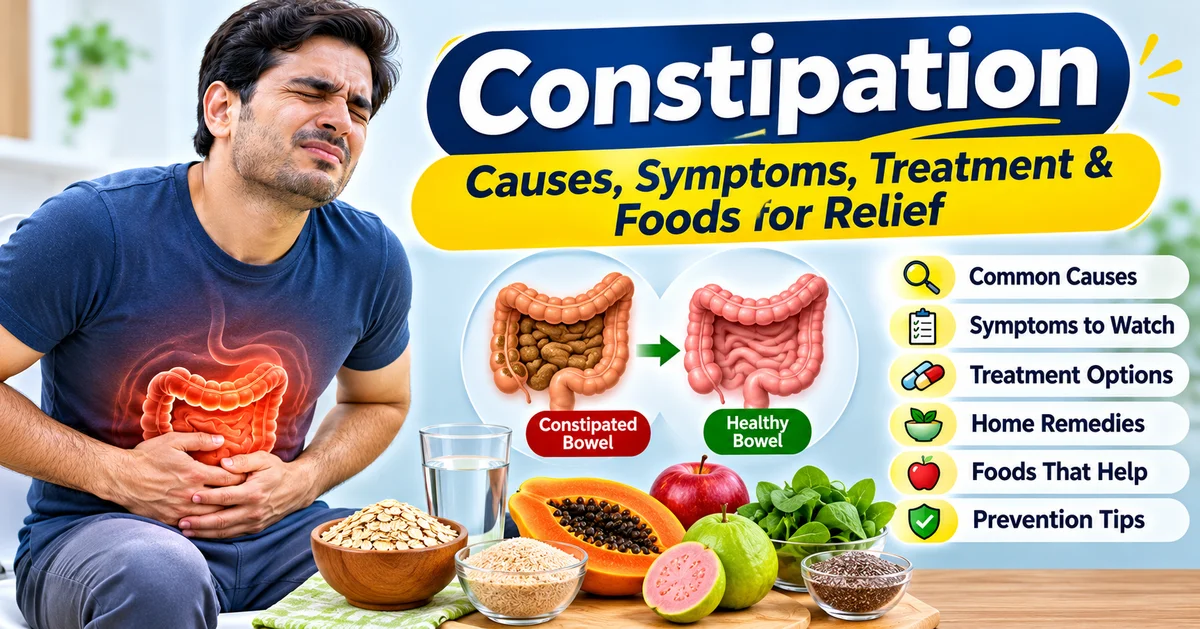
4. Which Foods Help Relieve Constipation?
Food habits can make a significant difference in managing constipation.
Instead of depending immediately on laxatives, start by improving your daily diet.
Here are some foods worth including.
1. Papaya
Papaya is a popular fruit in Indian households. It provides dietary fibre and water, making it a useful addition to a balanced diet.
You can include a small bowl of fresh papaya in your breakfast or as an evening snack.
2. Guava
Guava, particularly when eaten with its edible seeds and skin, provides dietary fibre.
It can help increase your daily fibre intake.
3. Oats
Oats contain soluble fibre, including beta-glucan. They can be included in breakfast with milk or water.
4. Green Vegetables
Include vegetables such as spinach, carrots, beans, peas and broccoli in your meals.
They provide fibre and other nutrients that support overall digestive health.
5. Whole Grains
Choose whole wheat roti, oats, dalia and other whole grains instead of relying entirely on refined flour products.
6. Dal and Pulses
Moong dal, masoor dal, chana and rajma are useful sources of fibre.
Increase their intake gradually if you experience gas or bloating.
7. Prunes and Raisins
Prunes contain fibre and natural sorbitol, which can help soften stool. Raisins also provide fibre and can be included in moderate quantities.
Remember: Increase fibre gradually rather than suddenly. Also drink sufficient fluids, because fibre works better when accompanied by adequate hydration.
5. What Should You Avoid If You Have Constipation?
There is no need to completely stop eating your favourite foods. However, try to reduce foods that provide very little fibre.
Some examples include:
Excessive refined flour products.
Frequent consumption of fast food.
Packaged snacks and chips.
Highly processed meals.
Excessive amounts of cheese and other low-fibre foods.
Also, avoid replacing regular meals with processed foods. A balanced diet containing fruits, vegetables, pulses and whole grains is a better choice.
6. Home Remedies and Daily Habits That May Help
If you experience occasional constipation, a few simple changes may help.
Drink Enough Water
Maintain adequate fluid intake throughout the day. Your requirement depends on your activity level, weather and health conditions.
Walk for 20–30 Minutes
A daily walk can support normal digestive activity. You do not necessarily need an intense workout.
Develop a Toilet Routine
Try visiting the toilet at a regular time, particularly after breakfast.
Eating stimulates natural bowel activity, so this can be a useful time to establish a routine.
Do Not Ignore the Urge
Whenever you feel the natural urge to pass stool, try not to postpone it.
Use a Small Footstool
While sitting on a western-style toilet, placing your feet on a small footstool may help position your knees above your hips. This position can make passing stool easier for some people.
Include Fibre-Rich Foods Daily
Do not depend on a single fruit or home remedy. Make fibre a regular part of your diet.
7. Which Medicines Are Commonly Used for Constipation?
When dietary changes and lifestyle improvements are not enough, a doctor or pharmacist may recommend a suitable laxative.
Different types of laxatives work in different ways.
Type | How it works | Examples |
|---|---|---|
Bulk-forming | Adds bulk to stool by absorbing water | Isabgol (psyllium husk) |
Osmotic | Draws water into the bowel | Lactulose, polyethylene glycol |
Stool softeners | Helps soften hard stool | Docusate |
Stimulant | Stimulates bowel movement | Bisacodyl, senna |
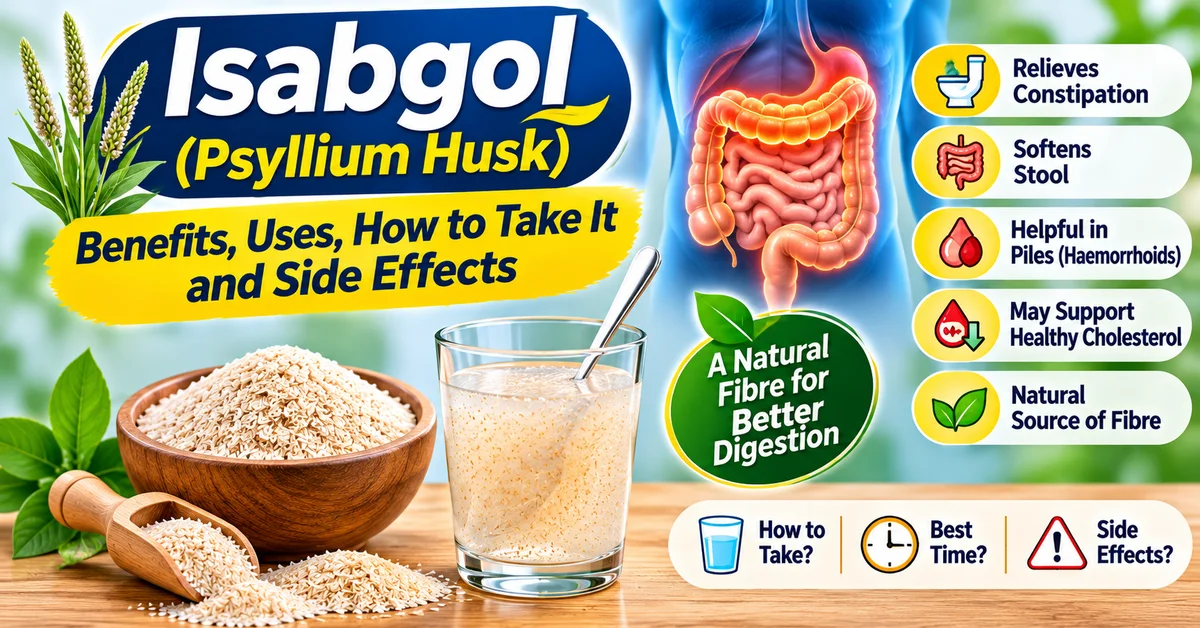
Isabgol (Psyllium Husk)
Isabgol is a fibre supplement commonly used to manage constipation. It absorbs water and increases stool bulk.
It should be taken with sufficient water and according to the product instructions or professional advice.
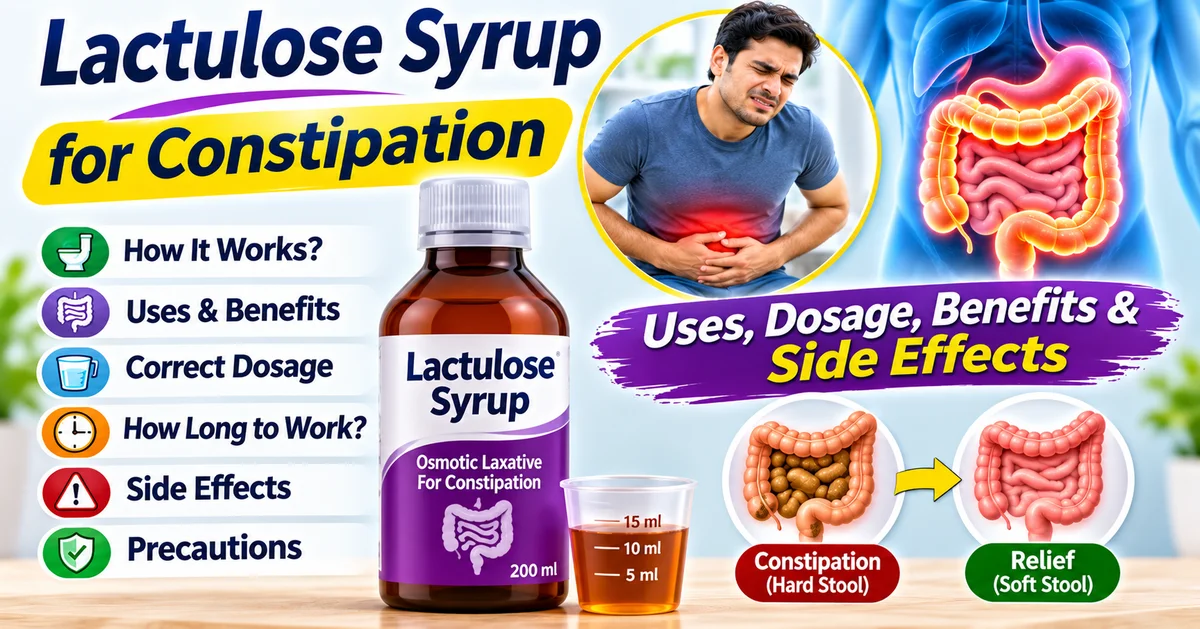
Lactulose
Lactulose is an osmotic laxative. It helps draw water into the bowel, making stool softer and easier to pass.
It may cause gas, bloating or abdominal discomfort in some people.
Bisacodyl
Bisacodyl is a stimulant laxative that encourages bowel movements. It is generally used for short-term relief or when recommended by a healthcare professional.
Important: Do not use laxatives regularly without medical advice. Persistent constipation needs proper assessment rather than repeatedly taking medicines for temporary relief.
8. When Should You Consult a Doctor?
Occasional constipation is common, but persistent symptoms need attention.
Consult a doctor if:
Constipation continues despite dietary and lifestyle changes.
You regularly experience difficulty passing stool.
You notice blood in your stool.
You experience unexplained weight loss.
You have persistent abdominal pain or bloating.
Your normal bowel habits suddenly change.
Seek urgent medical attention if constipation is accompanied by severe or constant abdominal pain, vomiting, or an inability to pass gas.
These symptoms may indicate a more serious digestive problem.
9. Can Constipation Be Prevented?
In many cases, yes. A healthy daily routine can reduce the chances of developing constipation.
Try following these simple habits:
Eat fruits and vegetables every day.
Include whole grains and pulses in your diet.
Drink enough fluids.
Stay physically active.
Avoid delaying bowel movements.
Maintain a regular toilet routine.
Avoid unnecessary and repeated use of laxatives.
Small changes made consistently are often more useful than trying several remedies for a few days and then giving up.
Frequently Asked Questions About Constipation
Q1. Is passing stool once a day necessary?
No. Not everyone needs to pass stool daily. Bowel frequency varies from person to person. Passing stool comfortably without excessive straining is more important.
Q2. Can constipation occur even if I pass stool daily?
Yes. If you pass hard stool, strain excessively or feel that your bowel has not emptied completely, you may still have constipation.
Q3. Which fruit is best for constipation?
Papaya, guava, pears, apples and prunes are useful fibre-containing choices. Include different fruits in your diet rather than relying on only one.
Q4. Does drinking warm water help with constipation?
Drinking warm water may be soothing and contributes to your daily fluid intake. However, there is no strong evidence that warm water is better than normal water for treating constipation.
Q5. Is Isabgol safe for daily use?
Psyllium can be used regularly by some people when taken correctly with adequate water. However, persistent constipation should be assessed by a healthcare professional.
Q6. Can constipation cause piles?
Repeated straining and passing hard stools can contribute to haemorrhoids (piles) and may worsen existing symptoms.
Q7. How long does constipation take to improve?
Mild constipation may improve within a few days after dietary and lifestyle changes. Long-standing constipation may take longer and sometimes requires medical treatment.
Final Words
Constipation may appear to be a small digestive problem, but when it continues for months, it can affect everyday comfort and quality of life.
The first step is to understand why it is happening. In many people, inadequate fibre, insufficient fluids, lack of physical activity and irregular toilet habits play an important role.
Start with simple changes: eat more fibre-rich foods, drink enough water, walk regularly and never ignore the urge to use the toilet.
If the problem continues, do not keep depending on home remedies or laxatives. Consult a doctor and identify the actual cause.
A healthy digestive system is not just about passing stool every day. It is about having comfortable, regular and trouble-free bowel movements.
Medical disclaimer: This article is for general educational purposes and does not replace professional medical advice, diagnosis or treatment.
Keywords: constipation, Constipation causes, Constipation treatment, Foods for constipation, Home remedies for constipation, Isabgol for constipation, Chronic constipation, Hard stool treatment
Medical references
These are useful authoritative sources to include at the end of the article: